

























An Industry Veteran’s Advice for Financial Institutions Preparing for the Upcoming US Currency Refresh
By Michael Torelli, VP Sales – Financial Institutions
Later this year, U.S. financial institutions will begin navigating one of the most significant changes to the cash ecosystem in decades: the first redesigned banknote of the Treasury’s Catalyst Series.
In previous articles, my colleagues have talked about what the Catalyst Series means for retailers and gaming. For financial institutions, though, my 20+ years of industry experience tell me the implications are fundamentally different and, in many ways, more consequential.
Financial institutions aren’t just users of cash; they’re custodians of it. Banks, Credit Unions, and cash in transit organizations are responsible for the entire cash lifecycle, from authenticating and processing notes to recirculating them back into the economy. The Catalyst Series will test how well institutions manage that responsibility over time.
Why Risk Looks Different for Financial Institutions
In retail or gaming, an unprepared system or an untrained associate can disrupt a transaction or tarnish a brand. In financial institutions, the risk runs deeper. It’s systemic.
Banks sit both upstream and downstream in the cash cycle. Risk doesn’t stop at the point of acceptance, it exists everywhere cash moves, touches technology, or passes through human hands. Over the years, I’ve walked through countless branch operations, vaults, and processing centers, and the reality is that cash intersects with people and machines far more often than most realize.
That risk shows up across a wide range of touchpoints:
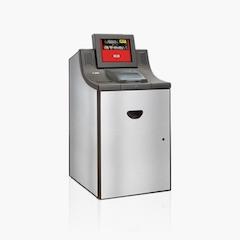
• Teller lines and teller cash recyclers
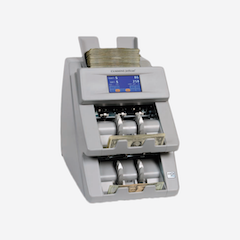
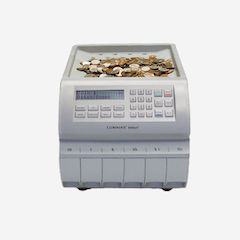
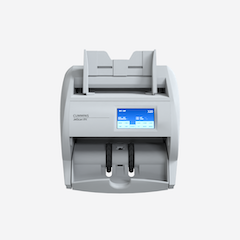
• Back counter and desktop note counters
• In lobby machines and ATMs
• Vaults and cash rooms
• Large scale cash processing centers
If software isn’t updated or equipment isn’t prepared, institutions can find themselves rejecting genuine notes or slowing deposits through manual handling. In thin margin environments, those small inefficiencies add up quickly. More importantly, non-optimal equipment or poorly trained associates can erode customer confidence, which is difficult to rebuild in the Banking world where customers have options.
The Transition Period Is the Highest Risk Moment
If there’s one thing I’ve learned through multiple currency transitions over more than 20 years in the cash ecosystem industry, it’s this: the most critical time is the moment the new banknotes first enter circulation.
When new notes enter circulation, staff haven’t handled them yet. Customers haven’t seen them. Uncertainty exists everywhere in the process. Fraudsters are looking for opportunities, outdated equipment and untrained staff can create discomfort for bank members.
Many new security features will be included with the new notes, both machine readable and human readable. Until systems are updated and teams are trained, risk will exist.
I’ve seen the consequences firsthand. Canada introduced a new series of polymer banknotes in 2011, as they transitioned all denominations to polymer. At the time, there were reports of high value exposure through both cashier and machine transactions. The risk of fraud is high with any new banknote release, especially with a new series, the public and cashiers are not experienced or trained to identify new security features.
Years earlier, we saw similar patterns with the Euro rollout in the early 2000’s, fraud activity spiked simply because people hadn’t seen the notes before. Many factors added to the complexity of the Euro release, I believe 12 different printing configurations were spread across multiple countries, in addition to the complete series (all denominations) being released simultaneously.
Each denomination release tends to follow the same pattern:
• New notes enter circulation
• Fraud activity increases
• Technology and training catch up
• The cash ecosystem stabilizes
That same cycle will repeat with every denomination in the Catalyst Series. Financial institutions need to be ready for each one.
People Remain Central to Trust
Even with a strong long-term plan and the right operational preparation, trust is ultimately built through people.
Customers look to their financial institutions as authoritative sources on currency authenticity. That creates responsibility, but it also creates opportunity. I’ve seen how much reassurance a brief, confident explanation from a teller can provide. When someone can say, “Yes, this note looks different, and here’s why it’s authentic,” identifying and calling out the latest in security technology immediately reinforces confidence.
To support these interactions, training should be ongoing, refreshed with each new denomination, and backed by simple reference tools that tellers and associates can rely on. When tellers and associates are confident and systems perform as expected, customers feel that readiness and trust follows naturally.
Planning for the Entire Series Refresh
The Catalyst series of Bank notes will start with the redesigned $10 note, expecting to be released in late 2026, marking the start of a staggered rollout that is expected to continue through the redesigned $100 in 2034. One of the most common mistakes I can predict when preparing for it is limited training and focusing narrowly on that first release.
Every two years, a new denomination will be released, with new security features, and new operational requirements. For long periods of time, old and new notes will circulate together, adding complexity across branches, vaults, and processing centers.
Institutions that treat this as a one-time event will struggle. Those that approach it with repeatable, long-term discipline will be far better positioned to manage risk, maintain efficiency, and preserve trust with each release.
Effective planning starts with clarity:
• Which technology can be upgraded versus needing to be replaced?
• Will technology support all future denominations?
• Defining a process to sequence updates and drive consistency across all branches and processing sites
• Define a simple, clear and repeatable training program
Each release should create an opportunity to improve, making institutions a little more efficient, a little more confident, and better prepared for the next one.
Waiting Adds Risk and Reduces Options
I’m often asked whether institutions can simply react once new notes begin circulating. Technically, that’s possible. In practice, it almost always means taking on more risk than necessary.
There are 500,000+ cash handling devices in use across the U.S., all dependent on the same manufacturers, technicians, and service networks for updates. Banks, credit unions, retailers, casinos, and CITs all draw from that same pool. When too many organizations do not leave enough time to order, deploy, train and implement new solutions; capacity tightens, flexibility disappears and risk is multiplied.
Institutions that act early give themselves breathing room. They can sequence upgrades, avoid bottlenecks, and move on timelines that make operational sense rather than reacting under pressure. Early preparation also allows teams to invest thoughtfully in equipment, process design, training, and communication.
The payoff is reduced operational risk behind the scenes and steady customer confidence at the front line. When systems work as expected and staff are prepared to explain what’s changing, trust remains intact even as currency evolves.
Start with CPI’s Resource Center
Effective U.S. banknote redesign preparation requires a broader, more systemic approach than many organizations initially expect. Financial institutions don’t have to navigate it alone.
CPI’s Currency Refresh Resource Center was built to help institutions prepare with confidence. It includes the Financial Institutions Readiness Playbook, which serves as a clear roadmap through the U.S. currency redesign, as well as a Device Audit Template that simplifies the process of inventorying equipment and planning upgrades.
Because this is a multi-year transition, staying informed matters. Through the Resource Center, institutions can also sign up to receive updates as new guidance and information become available.
In my experience, the earlier planning begins, the smoother each phase of the transition will be, from the first redesigned $10 to the final $100. And institutions that manage risk thoughtfully while cultivating trust consistently will be the ones that come through this change stronger than when they started.
Market Solutions